Winter heating costs
Heat rises. If it leaks out through the attic, your furnace runs longer to replace it. On many older Syracuse homes, air sealing and insulation cut winter heating consumption noticeably in the first billing cycle.
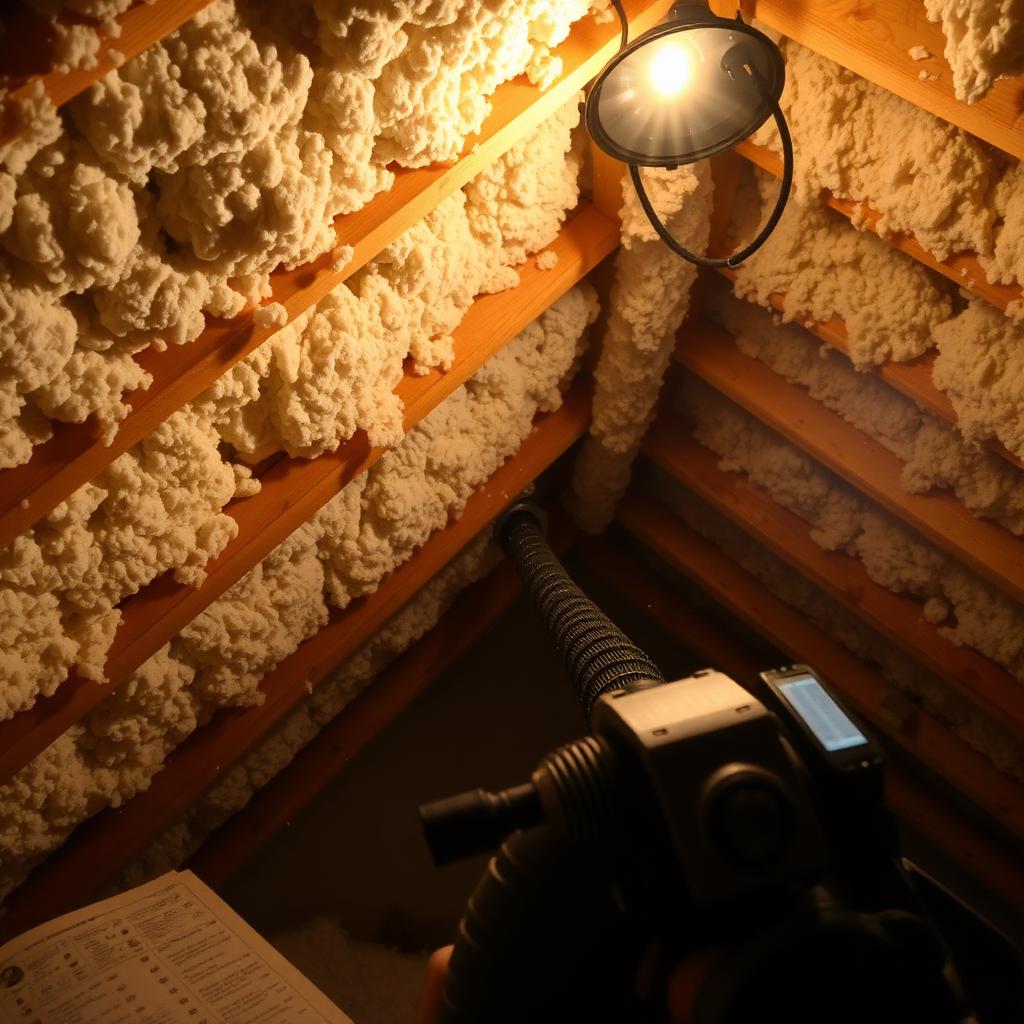
Air sealing, insulation upgrades, and balanced ventilation for Central New York attics — the single biggest factor in winter heating costs, ice dam prevention, and shingle warranty validity.
Most Syracuse homes built before 2010 fall short on all three of the things that make an attic work: they leak warm air upward, they carry less insulation than current code expects, and their soffit-to-ridge airflow is either unbalanced or blocked entirely. Any one of these on its own is manageable. All three together drive up heating bills, build ice dams every winter, and cook shingles from underneath.
Hometown Exteriors assesses the whole system — not just one component — and gives you a straight-talk report on what your attic actually needs, in what order, and what it will cost.
We'll walk the attic, measure what's there, and send you a written scope.
Air sealing, insulation, and ventilation are three parts of one interdependent problem. Fix only one and the others undermine the result. Fix all three in the right order and the house behaves differently through the whole year.
Heat rises. If it leaks out through the attic, your furnace runs longer to replace it. On many older Syracuse homes, air sealing and insulation cut winter heating consumption noticeably in the first billing cycle.
Ice dams form when heat escaping into the attic melts snow that then refreezes at the cold eave. The durable fix lives here, not at the gutter. See our ice dam page for the mechanism.
Owens Corning and most other manufacturers require balanced attic ventilation for full warranty coverage. Skip it and a legitimate warranty claim can be denied years down the road.
An unventilated attic can hit 140°F on a sunny July day. That heat radiates down into second-floor bedrooms and drives AC costs the same way heat loss drives heating costs.
Air sealing is the highest-return attic project and the one most contractors quietly leave off the quote. The idea is simple: find every place warm indoor air is escaping into the attic and close it. In a typical Syracuse home the biggest offenders are recessed can lights (often unrated for insulation contact), the attic access hatch, plumbing stack penetrations, bath fan ducts vented into the attic rather than out through the roof, wiring chases where they enter walls, and the top plates of interior partition walls.
None of these are dramatic on their own. Added together on a typical two-story house they can equal a hand-sized hole in the ceiling running twenty-four hours a day. Sealing them is patient, unglamorous work with foam gun, mastic, and rigid backer, and it happens before insulation goes down because insulation over an unsealed penetration hides the problem but does not stop it.
Current New York energy code targets R-49 in attic assemblies, which translates to roughly 14 inches of blown cellulose or 16 inches of loose-fill fiberglass. Most Syracuse homes built before 2010 carry somewhere between R-19 and R-30 — six to nine inches — and homes built before 1980 often carry less than R-19. That gap between what is up there and what the climate needs is where the heating bill lives.
Blown cellulose vs. fiberglass. For retrofits over an existing attic floor, we generally recommend blown cellulose: denser R-value per inch, better coverage in irregular framing bays, and less thermal bridging across joists. Fiberglass batts remain a fine choice in new construction with clean bays, but they underperform in typical retrofit conditions where wiring, junction boxes, and old framing get in the way.
Depth markers. After a top-up we install depth rulers in the attic so you can verify the coverage yourself and monitor settling over time. Cellulose settles roughly 20 percent in the first year, which is normal and factored into the initial install depth.
The goal of attic ventilation is a roof deck that stays close to outdoor temperature year-round. That requires balanced airflow: cold outdoor air entering low at the soffits, warm attic air exhausting high at the ridge, with the roof cavity acting as a chimney in between.
Code targets one square foot of net free vent area for every 300 square feet of attic floor when intake and exhaust are balanced, split roughly 50-50 between soffit intake and ridge exhaust. Real Syracuse attics fail this test in predictable ways: soffit vents painted over or stuffed with insulation that blocks airflow at the eave, ridge vents installed but no matching soffit intake so the ridge draws air from the house instead, or a mix of ridge vents and gable-end vents that short-circuit each other.
The fix is not "add more vents." It is measure what is there, unblock what is blocked, add baffles at the eaves so insulation cannot re-block the soffits, and rebalance intake and exhaust so the airflow path actually goes soffit-to-ridge.
Shingle manufacturers write ventilation requirements into their warranties because inadequate ventilation is one of the fastest ways to shorten a roof's life. Trapped attic heat cooks shingles from underneath, causing premature curling, blistering, and granule loss. Trapped attic moisture rots the roof deck. Ice dams tear at the eaves every winter.
Most manufacturers, Owens Corning included, require balanced ventilation meeting the 1:300 ratio for full warranty coverage. If you file a warranty claim in year 15 on a 50-year shingle and the manufacturer's inspector finds inadequate ventilation, the claim can be denied — leaving you with a failed roof and no recourse. If you are considering asphalt shingle roofing or a roof replacement, attic ventilation is not optional; it is part of the roof.
Our attic assessment is a physical walk-through, not a sales presentation. We measure existing insulation depth in several locations, count and document air-sealing targets (can lights, penetrations, hatch condition), inspect the soffit-to-ridge ventilation path from both the attic side and the exterior, check for signs of moisture or existing damage on rafters and decking, and note anything else the roof system needs to know about.
You get back a written report separating what is working from what is not, a prioritized list of what to fix in what order, and component-level pricing so you can choose to do everything at once or stage it. We do not upsell attic work as a package if only one component actually needs attention.
For typical Central New York homes, expect roughly:
Doing all three on one visit is meaningfully cheaper than sequencing them across separate jobs, and the components work together — under-insulating with new ventilation, or over-insulating without air sealing, gives you a fraction of the benefit.
We assess and upgrade attic ventilation and insulation across Onondaga County, including Syracuse, Clay, Cicero, Liverpool, Baldwinsville, Brewerton, Fayetteville, Manlius, and Marcellus, plus Chittenango in Madison County. See all locations on our service areas page.
Get a free, no-obligation estimate from Central New York's trusted roofing & gutter experts.