Water-stained ceilings and walls
Usually along exterior walls and above windows, often appearing days after the last snowfall.
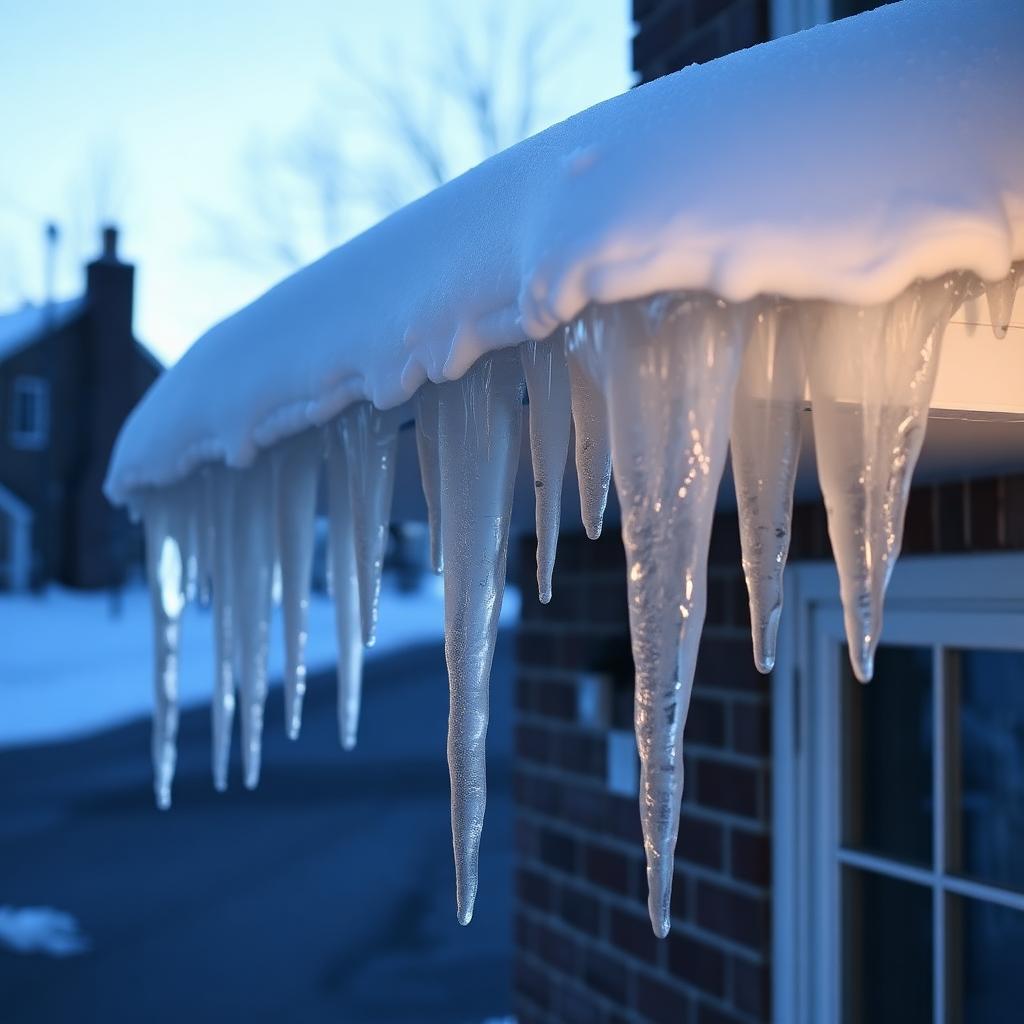
A heat problem wearing a plumbing disguise — and one we know how to fix.
Every winter, Central New York homeowners watch a ridge of ice build at the edge of the roof, then watch water stain the ceiling below it. Ice dams are not bad luck and they are not inevitable. They are a heat problem wearing a plumbing disguise.
Hometown Exteriors repairs the damage ice dams cause and, more importantly, fixes the conditions that create them.
Summer and fall are when this gets solved cheaply.
Usually along exterior walls and above windows, often appearing days after the last snowfall.
Which then insulates worse, leaks more heat, and feeds the next dam. The problem compounds.
Water tracks down inside exterior walls: peeling paint outside, mold risk inside.
Dragged loose by the weight of the ice ridge anchored to them.
Where repeated soaking degrades the first few feet of underlayment and decking.
Snow lands on your roof. Heat escaping from the living space below warms the upper roof deck and melts the underside of that snow. The meltwater runs down the roof until it crosses the overhang — the part of the roof with no warm house underneath — refreezes there, and builds a ridge of ice. Every melt cycle adds water behind the ridge. That trapped water has nowhere to go but sideways and up, underneath shingles that were designed to shed water flowing down.
That is the whole mechanism: a warm upper roof, a cold eave, and roughly 120 inches of Syracuse snow for fuel. Icicles along the gutter line are the postcard version; the dam is what is sitting behind them.
What helps. Removing snow from the lower few feet of roof with a roof rake (from the ground, never from a ladder) takes away the dam's water supply. Melt channels through the ice ridge relieve trapped water; calcium chloride in a fabric sleeve laid across the dam is the standard low-harm method. Professional steam removal exists for severe cases and is the gentlest mechanical option.
What wrecks roofs. Hatchets, hammers, ice picks, and pressure washers take shingles off with the ice. Rock salt and ice-melt pucks thrown loose corrode flashing and kill plantings below. Heat guns and torches on a roof need no further explanation. Every spring we repair roofs that lost their fight with an ice pick.
What we do. We handle the roof system side: assessing and repairing the damage water has done, and rebuilding the eave detailing so the next dam cannot get in. If you have active leaking right now, see our roof leak repair page.
Ice dams are built by escaping heat, so the durable fix happens where the heat escapes. In rough order of impact:
A roof replacement is the natural moment to get all of this right at once: membrane, ventilation, and eave detailing are part of how we build a roof replacement for this climate.
The dam recipe needs three ingredients in quantity: snow on the roof, heat under it, and temperatures that hover around freezing. Syracuse supplies all three better than almost anywhere in America. Lake-effect bands off Lake Ontario reload the roof with snow all winter. The region's housing stock skews older, built before modern insulation and air-sealing standards. And CNY winters spend weeks oscillating through the exact freeze-thaw window where eaves stay frozen while roof decks melt. A house that would never build a dam in a colder, drier climate builds one here every February.
We repair ice dam damage and build dam-resistant roof systems across Onondaga County, including Syracuse, Clay, Cicero, Liverpool, Baldwinsville, Brewerton, Fayetteville, Manlius, and Marcellus, plus Chittenango in Madison County.
Get a free, no-obligation estimate from Central New York's trusted roofing & gutter experts.